
Research and Publications
This research asks what consciousness is, how the experience of separation arises, and what both mean for how transformation actually happens. It puts Jung in sustained dialogue with Patañjali, and both in dialogue with contemporary brain science.
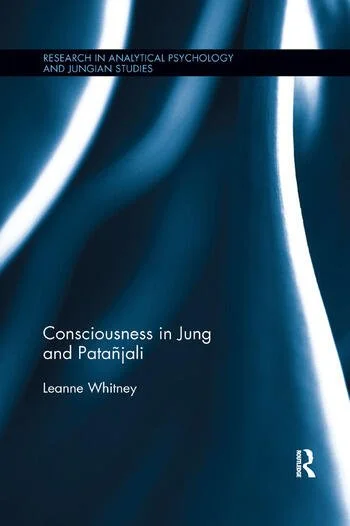
Book
A comparison of how consciousness is represented in Jung’s depth psychology and Patañjali’s Classical Yoga, and what each implies about whether consciousness arises from psychic process or is the ground of Being. Where the two models diverge most sharply is the unconscious: Patañjali has no equivalent, and distinguishes pure consciousness from its contents in a way Jung does not. The book argues that Jung’s synchronicity hypothesis, which holds mind and matter to be two aspects of one underlying whole, is where a bridge between them might be built.
Reception: reviewed in the Journal of Analytical Psychology (Atmanspacher, 2019) and the International Journal of Jungian Studies (Mitchell, 2019). Endorsed by Christopher Key Chapple, Dean Radin, and Lionel Corbett.
Peer-Reviewed Articles
In Jungian psychology the knot appears as a complex: an emotionally charged bundle of memory, image, and affect that grips psyche and body together. In yoga it appears as a granthi: a subtle obstruction in the flow of prāṇa that binds awareness to conditioned patterns. The paper places the two side by side and argues that they illuminate each other, both marking where life energy becomes bound. It proposes that both point toward the same resolution, which is not elimination but loosening: complexes relativized and brought into dialogue with the larger psyche, granthis softened until energy moves freely again. The practitioner’s task, on this reading, is not to cut the knot but to create the conditions in which it can soften.
Sleep paralysis has been reported from antiquity to the present across widely separated cultures, and those who experience it commonly describe nocturnal assault by a dark presence. The paper reads this through both the neurocognitive literature and Jungian archetypal theory, taking seriously a phenomenon that occurs in the narrow territory where a person is both asleep and awake.
Jung’s individuation process rests on the unconscious, complexes, the archetype of the Self, and the religious function of the psyche, but his ontological commitments were never made explicit. The paper argues that read through Patañjali, that absence blurs ontological questions into epistemic ones. Drawing on Patañjali’s more consistent commitments alongside the measures of affective neuroscience, it addresses a question Jungian scholarship has long argued over: whether the archetype is innate or emergent.
The paper argues that reductive ideologies, materialist and fundamentalist alike, obscure our capacity to experience the numinous directly, and that a viable reconciliation of science and religious experience has continued to elude us. Given how much weight brain science now carries, it contends that no psychology taking the soul seriously is likely to survive without finding an alliance with it, and proposes affective neuroscience as a language for that bridge.
For both Jung and Patañjali, the human desire to understand God is as real as any other instinct. Freud, an atheist, disagreed, but all three took affect as the empirical way into the psyche. Drawing on a line of contemporary research holding that conscious states are inherently affective and that the upper brainstem is intrinsically conscious while the cortex is not, the paper examines what follows if consciousness has less to do with reflective cognition than with instinct, and returns on that basis to the Freud–Jung rupture.
Jung called himself an empiricist and resisted metaphysical claims, yet his depth psychology hypothesizes an unconscious agent we can never know directly. The paper argues that both the ego and the unconscious, though Jung never says so outright, are treated in his work as ontically real, and reconsiders that unstated ontology through Classical Yoga.
Scientific work on reality tends to concentrate on epistemic states and empirical results while leaving ontology aside. The paper argues this cannot be held rationally, since our own Being cannot be excluded from the equation, and that if the nondual traditions are right that subject-object learning cannot reach knowledge of ontic reality, empirical science will always carry that limit. It puts Jung and Patañjali in dialogue as one way to ally dualistic and nondualistic models.
Some of Jung’s writing carries a nondual sensibility, particularly where he describes the Self as the totality of the psyche and in his work on the unus mundus and synchronicity. Overall, though, he remains dualistic: the ego is never relinquished, and pure consciousness beyond its images is not his subject. The paper compares Jung’s Self with accounts of consciousness in several nondual traditions, argues that the Self as ultimate subject can never become an object of consciousness, and draws out what follows for psychotherapy.
Book Chapter
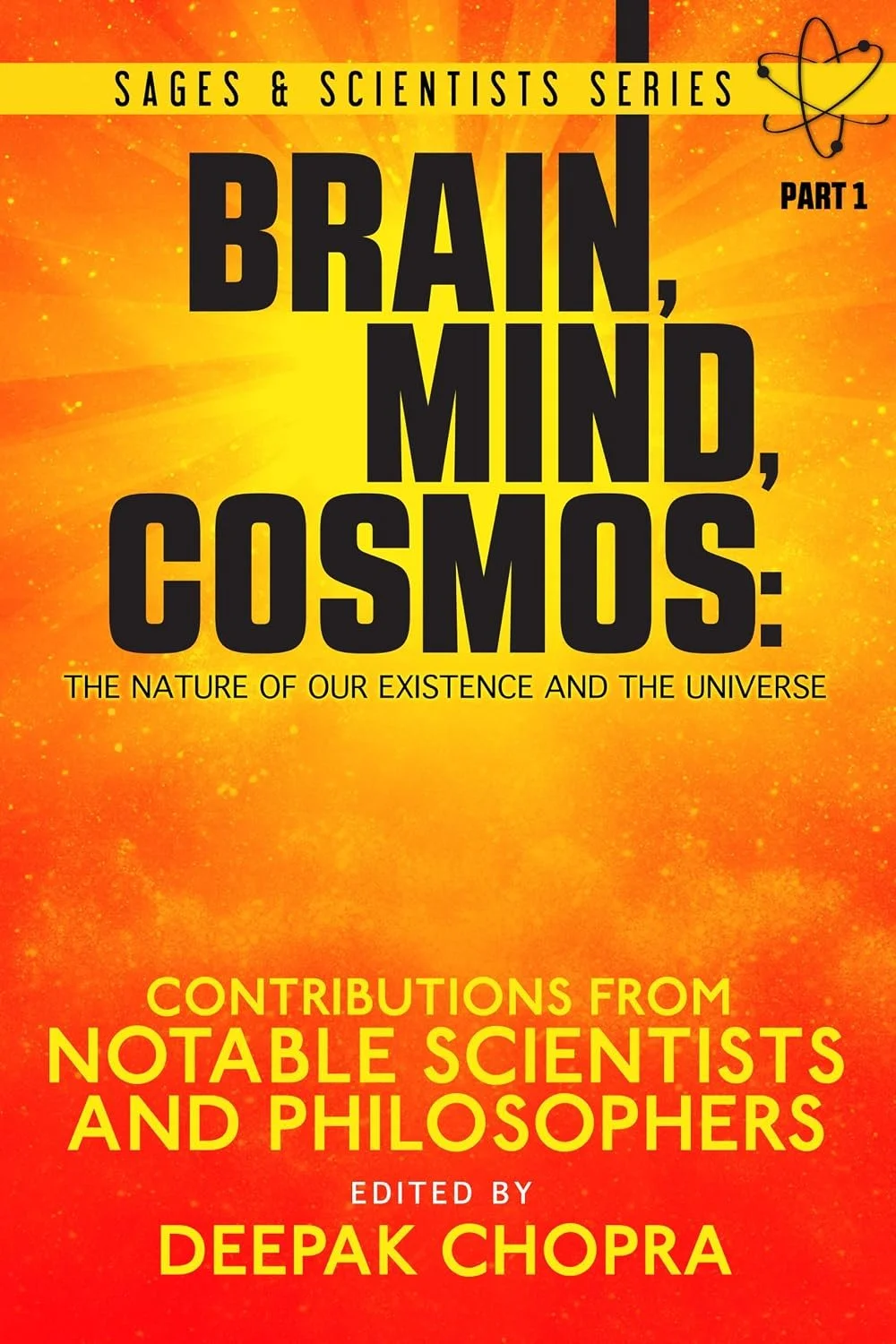
The chapter proposes that if the liberatory psychologies of the East find no ego in our psychic anatomy except one founded on misunderstanding, the same should hold for the psychic anatomy described in the West, since human beings are built the same wherever they live. It puts two depth psychological concepts, the ego and the unconscious, in dialogue with puruṣa and prakṛti, and asks whether the two may be co-creating each other. Its argument is that the body-mind, our instrument of perception, can apprehend pure consciousness directly once its distortions have been cleared.